
Interior refurbishment within the UAE context represents a complex balance between design ambition and practical constraints. Time pressures faced by landlords, tenants, and facility operators have encouraged a broader evaluation of methods such as interior wrapping Dubai, which has gained recognition beyond specialist design applications. The discussion now centres on efficiency specifically, how upgrades can be implemented with reduced operational disruption, controlled expenditure, and a lower environmental footprint.
Traditional renovation typically involves removing and replacing existing finishes: demolition, carpentry, tiling, painting, mechanical adjustments, and the coordination of multiple trades. Even small upgrades can trigger compound workstreams permits, deliveries, site access approvals, and waste hauling.
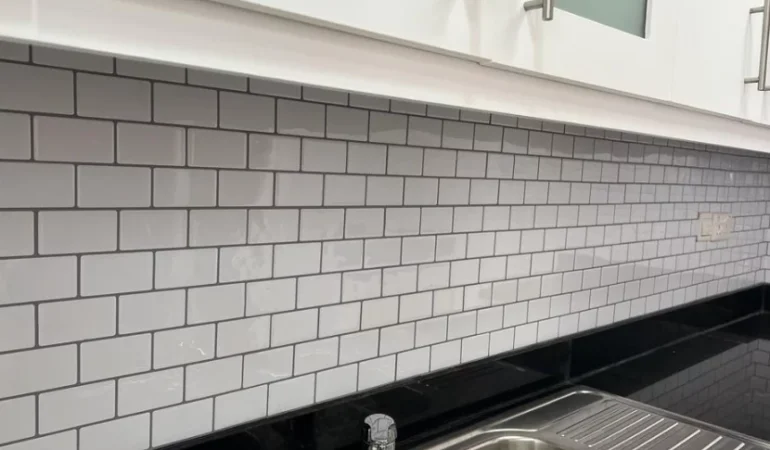
By contrast, vinyl wrapping is a resurfacing method. Instead of discarding cabinets, doors, wall panels, or counters, the existing substrate is cleaned, prepared, and re-skinned with architectural films engineered to mimic woodgrain, stone, metal, or matte colour systems. The underlying structure remains intact, which changes the entire cost and disruption profile.
In practice, renovation budgets in Dubai and across the UAE tend to expand as the project advances, often because demolition reveals hidden repairs or because finishing upgrades “creep” into scope. Current market guidance for kitchen renovation in Dubai, for instance, places a standard 8–12 sqm kitchen remodel broadly between AED 27,500 and AED 71,500, with luxury projects rising substantially beyond that.
Wrapping reduces exposure to many of the cost multipliers that drive renovation inflation. Since the original assets remain in place, fewer materials are purchased, fewer specialist trades are required, and waste disposal is minimal. The economic implication is not merely that wrapping is cheaper; it is that the pricing structure is typically more stable because fewer variables are introduced mid-project.
Time is often the silent cost in refurbishment. Renovations can stretch into weeks due to sequential trade scheduling and curing times for adhesives, paints, grouts, and cement-based work. For occupied homes, this often means disrupted routines; for offices and retail spaces, it can mean impaired operations or temporary closure.
Wrapping projects, by design, compress the critical path. A resurfacing scope can often be scheduled as a short, contained installation window because the process is non-demolition and does not rely on wet trades. That speed matters in a region where rental turnovers, fit-out deadlines, and hospitality refresh cycles can be unforgiving.
The physical discomfort of renovation dust, noise, debris, access restrictions tends to be underestimated in planning documents. Yet the UAE context amplifies the importance of waste and site control, especially in managed communities, high-rise buildings, and mixed-use developments.
Construction and demolition waste is widely reported as a dominant share of total solid waste in the UAE, often cited around 70% by weight while Dubai alone is associated with roughly 5,000 tonnes of construction and demolition waste per day. The implication is straightforward: when a project strategy avoids demolition, it avoids one of the most waste-intensive phases of the refurbishment cycle.
This is not only an environmental issue but an administrative one. Dubai’s green building direction places increasing emphasis on responsible construction practices and waste controls.
Contemporary architectural films are engineered for abrasion resistance, moisture exposure, and indoor heat conditions, and they are often supported by multi-year warranties depending on product category and application. In commercial resurfacing contexts, providers commonly cite life expectancy ranges that can extend into a decade or more under appropriate conditions.
Where this becomes strategically relevant is in medium-term ownership or tenancy horizons. If a space is likely to be refreshed again within five to ten years common in commercial settings the lifecycle argument for demolition weakens.
Traditional renovation is permanent by nature; it commits the asset to a single direction with high reversal cost. Wrapping, however, introduces reversibility and iteration. That matters in the UAE, where interior trends shift quickly, where tenants may be restricted from structural change, and where owners often value the ability to modernize without permanently altering the underlying property.
In that context, vinyl interior wrapping dubai functions less as a shortcut and more as a pragmatic design tool: it allows surface reinvention while keeping the building’s core intact.
The comparison between vinyl wrapping and traditional renovation in the UAE is best understood as a trade-off between structural change and controlled transformation. Renovation remains essential when layouts must change or when systems require replacement. Yet when the objective is to elevate finishes, modernize aesthetics, and reduce downtime, wrapping offers a compelling profile: tighter scheduling, less disruption, lower waste generation, and more predictable budget behaviour. In a region built on speed and standards, those characteristics increasingly define the smarter upgrade pathway.