
Dubai is one of the most challenging environments in the world for interior surface materials. Extreme heat, fine airborne dust, constant air-conditioning cycles, and intense sunlight entering through large glazed areas place continuous strain on interior finishes. At 360 Wraps UAE, we work exclusively within these conditions, delivering interior wrapping Dubai solutions that are tested daily by real-life use rather than controlled theory. Our understanding of interior vinyl wrap performance is built on hands-on application, long-term observation, and consistent results across residential, commercial, and hospitality interiors throughout the city.
Interior vinyl wrapping is no longer a purely decorative choice. In Dubai, it serves a functional role as a performance-focused surface system, designed to withstand environmental stresses that regularly cause traditional interior materials to fail.
Dubai’s climate is defined by prolonged high temperatures that regularly exceed 45°C outdoors, paired with constant mechanical cooling indoors. This produces persistent thermal cycling, where interior surfaces experience expansion and contraction over extended periods. In parallel, fine desert dust infiltrates interiors despite filtration systems, accumulating on surfaces and accelerating abrasion.
Conventional finishes painted MDF, laminates, veneers, and thermoplastic foils are not engineered for this level of stress. Over time, paint fractures, laminates delaminate, and wood-based materials deform. These failures are not anomalies; they are predictable outcomes of material-environment mismatch. Architectural vinyl wraps, when properly specified and installed, are engineered to perform under precisely these conditions.
High-performance interior vinyl wraps are multi-layer cast PVC films designed for dimensional stability. They are not rigid materials and do not rely on structural stiffness to maintain form. Instead, they accommodate thermal movement without cracking, warping, or surface failure.
In indoor environments maintained between 18–30°C standard across Dubai professionally installed vinyl wraps remain structurally stable regardless of external heat exposure. At 360 Wraps, we have consistently observed wrapped cabinetry, wall panels, and fitted furniture maintain adhesion and surface integrity over 7–10 years without degradation when correct material grades are used.
This is not an incidental performance. Architectural vinyl is manufactured with controlled adhesive systems that remain stable under sustained heat loads common in Dubai interiors.
Dust is not a cosmetic issue in Dubai, it is a material performance factor. Fine particulate matter acts as a micro-abrasive, degrading porous and semi-porous finishes over time. Vinyl wraps provide a sealed, non-porous surface that prevents dust ingress into substrates.
This characteristic alone materially extends surface lifespan. Wrapped interiors do not absorb contaminants, do not stain from particulate accumulation, and do not require aggressive cleaning regimes, which is why furniture wrapping Dubai applications continue to maintain visual consistency in high-use residential and commercial interiors. Reduced chemical cleaning directly correlates with prolonged surface durability and visual consistency.
From an operational standpoint, vinyl-wrapped interiors maintain appearance with lower maintenance input, which is critical for commercial and hospitality environments.
Interior vinyl performance is inseparable from installation methodology. In Dubai’s climate, adhesion failure is not caused by heat, it is caused by improper surface preparation and incorrect installation protocols.
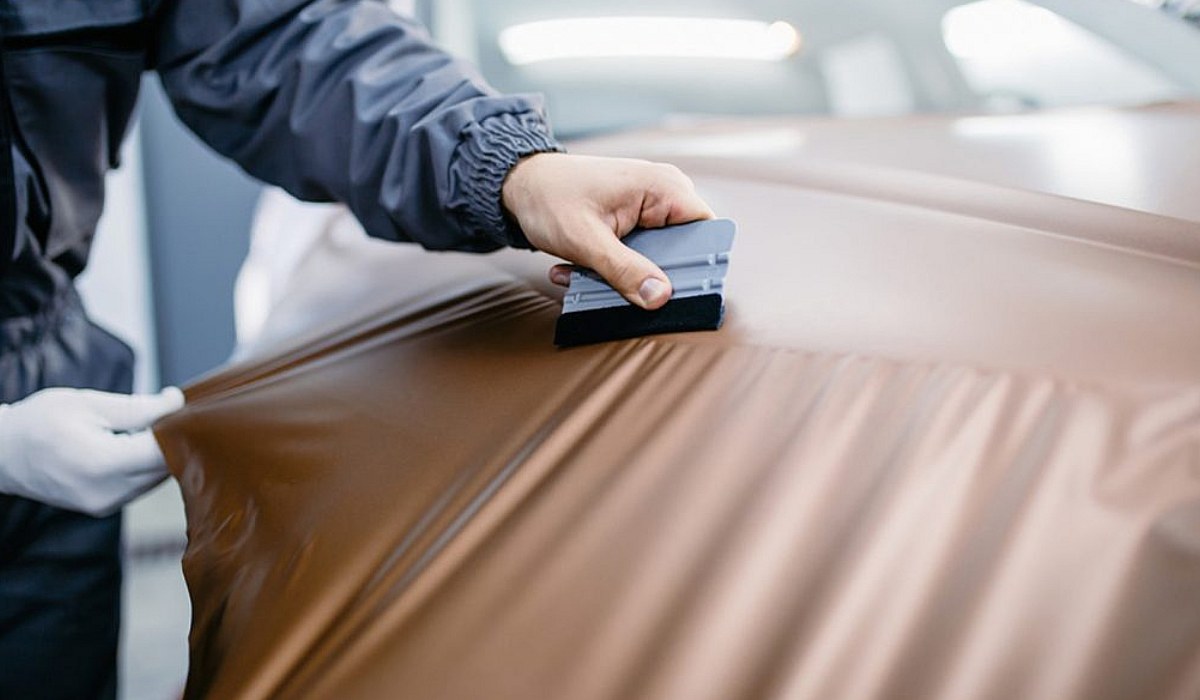
At 360 Wraps, installation is treated as a controlled technical process. Surfaces are degreased, stabilized, moisture-assessed, and post-heated to lock adhesive memory. These steps are mandatory, not optional. When executed correctly, vinyl wraps do not lift, bubble, or fail at edges even under sustained thermal exposure. Failures attributed to “vinyl limitations” are, in practice, installation failures.
Interior wrapping is a material-efficient system. By retaining existing substrates cabinetry, doors, partitions, and panels vinyl wrapping eliminates demolition waste and reduces refurbishment timelines. This aligns directly with Dubai’s increasing emphasis on efficient, low-disruption interior upgrades.
Industry lifecycle analysis shows surface wrapping reduces refurbishment waste volumes by more than 50% compared to replacement-based renovation. For developers, landlords, and asset managers, this translates into faster project turnover, predictable costs, and extended asset usability.
Dubai interiors demand precision, consistency, and longevity. Vinyl wraps meet these requirements without compromise. Modern architectural films replicate stone, wood, metal, and solid finishes with controlled tolerances and repeatable quality without the vulnerabilities of natural materials in a high-stress climate.
Importantly, vinyl maintains color stability under indoor UV exposure from large glazing systems, a defining feature of Dubai architecture. Interior vinyl wraps are not an alternative solution in Dubai, they are the correct solution when performance is the priority. In an environment defined by heat, dust, and mechanical cooling, architectural vinyl outperforms traditional finishes in durability, maintenance efficiency, and lifecycle value.
At 360 Wraps UAE, our position is unequivocal: when premium materials are paired with professional installation, interior vinyl wraps deliver long-term structural stability and visual consistency under Dubai’s most demanding conditions. This is not a trend. It is applied material science, proven on-site, every day.