
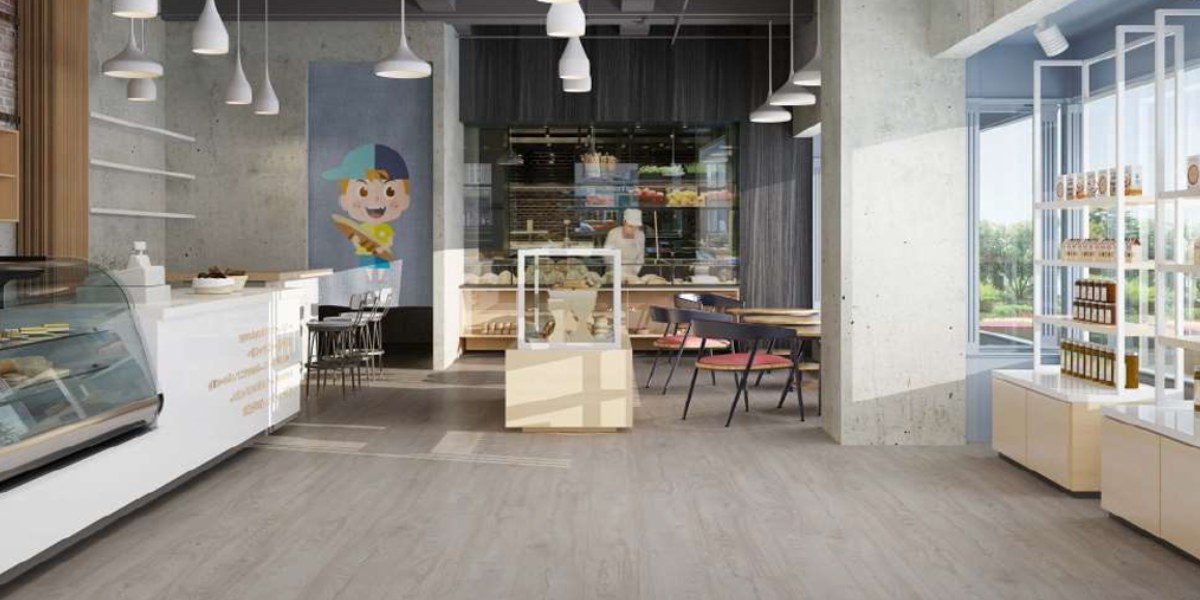
In the UAE, slip risk is not seasonal, it is situational. While winter rains may only visit us briefly, their impact on commercial entrances is immediate and measurable. Add beach sand, humidity, polished stone flooring, and high footfall, and the entrance of a restaurant or retail space becomes one of the highest liability zones in the building.
At 360 Wraps, best vinyl wrap company Dubai, we work closely with restaurant groups, mall operators, and retail brands across Dubai and Abu Dhabi. One pattern is consistent: most slips do not occur deep inside the space. They happen within the first three meters of entry where wet shoes, sand abrasion, and smooth flooring collide.
This article outlines what decision-makers should specify, not guess, when selecting anti-slip floor wraps for wet commercial entrances in the UAE.
According to international safety data, slips and falls account for 20–25% of all workplace accidents, with hospitality and retail ranking among the most exposed sectors. In coastal UAE locations, that risk is amplified by two local factors:
Most entrance floors are designed for aesthetics: large-format porcelain, marble, or polished concrete. Visually impressive, yes. Slip-resistant when wet? Often no.
Slip resistance is measured using the Coefficient of Friction (COF). In simple terms, the higher the COF, the more grip a surface provides underfoot.
High-quality anti-slip floor wraps achieve this by:
Unlike coatings or tapes, wraps offer uniform performance, predictable wear behavior, and visual consistency critical in brand-sensitive retail environments.
From an operational standpoint, not all “anti-slip” solutions are equal. When specifying floor wraps for UAE entrances, we advise clients to focus on the following criteria:
Inferior materials harden, discolor, or lose grip within months. Specify UV-stable, commercial-grade vinyl composites designed for regional climate stress.
This is especially critical for food & beverage operators.
From a risk-management perspective, wraps offer predictable performance, which is what insurers and safety auditors care about.
Dubai Municipality and UAE safety regulations place the responsibility squarely on the operator. In the event of a slip incident, the first question is rarely “Was the floor beautiful?”
It is “Was the floor safe under foreseeable conditions?”
Anti-slip floor wraps help demonstrate:
From a financial standpoint, the math is simple. One preventable slip claim can exceed the cost of a professionally installed entrance solution by 10–15x.
Our Perspective At 360 WrapsAt 360 Wraps, we approach floor safety as a design-engineering problem, not a product sale. Every entrance behaves differently. Footfall, cleaning cycles, sand exposure, and brand requirements all matter.
That is why our process focuses on:
The result is an entrance that looks intentional, performs reliably, and protects both people and brand reputation. In the UAE, wet entrances are not an exception, they are an inevitability. The question is not whether moisture or sand will reach your entrance floor, but whether the surface is engineered to handle it. Anti-slip floor wraps, when specified correctly, are one of the most effective, discreet, and commercially intelligent solutions available today, and increasingly part of how operators approach floor wrapping Dubai standards at the point of entry. Safety should never be visible as a compromise. It should be built into the surface itself.